














DOST-PNRI spearheads nuke tech for food and health at NSTW 2024
- Details
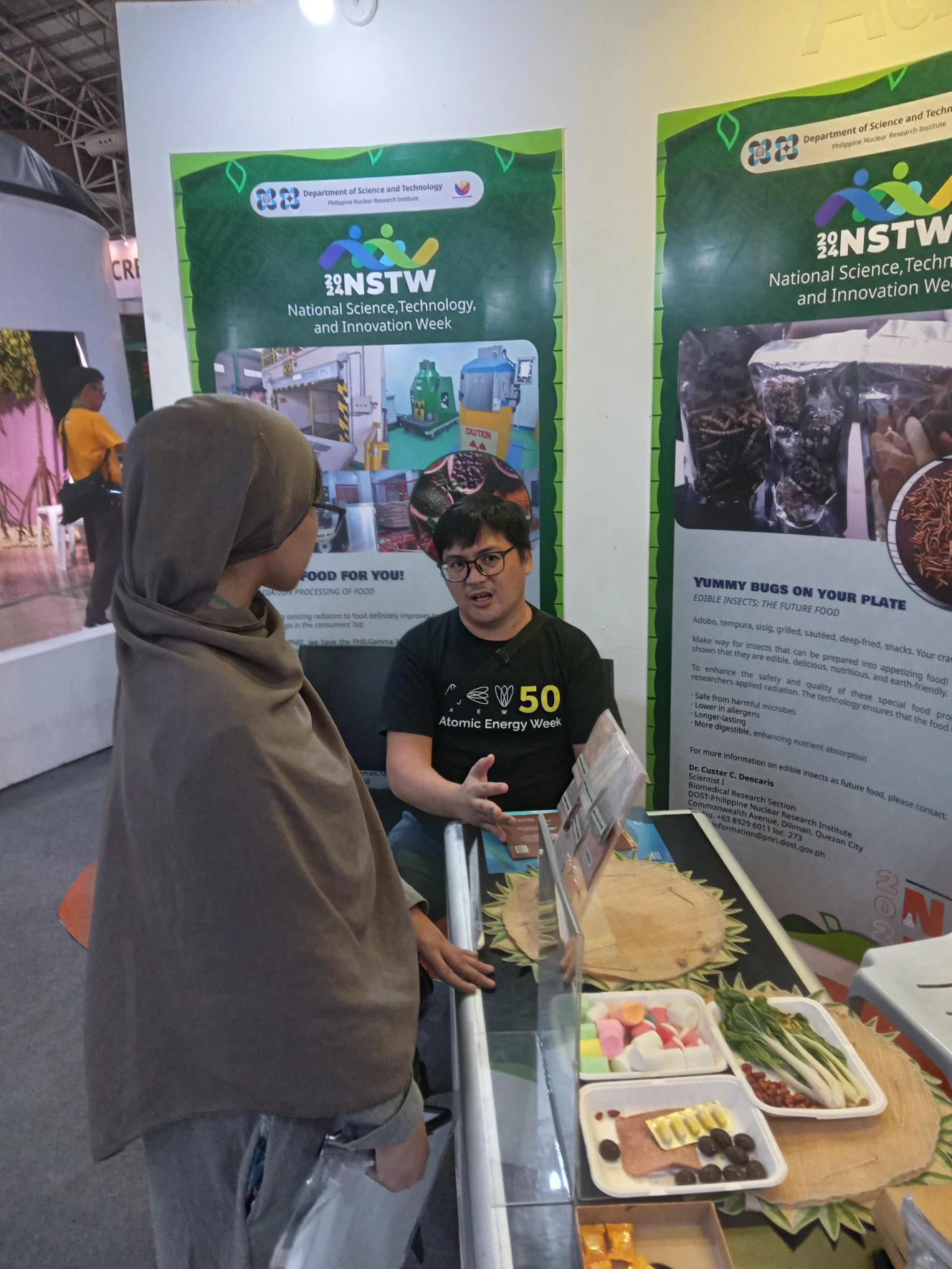
DOST-PNRI spearheads nuke tech for food and health at NSTW 2024
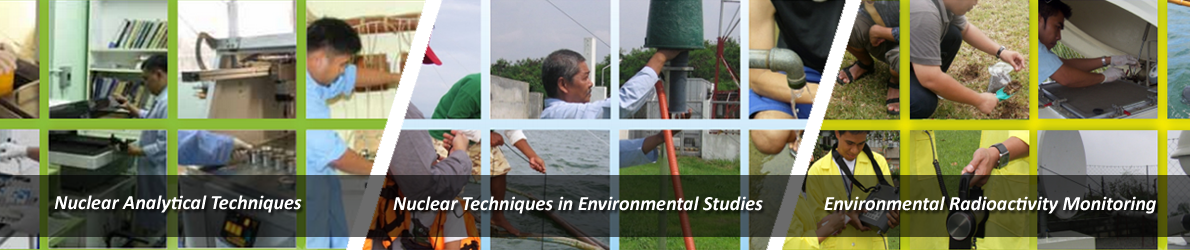
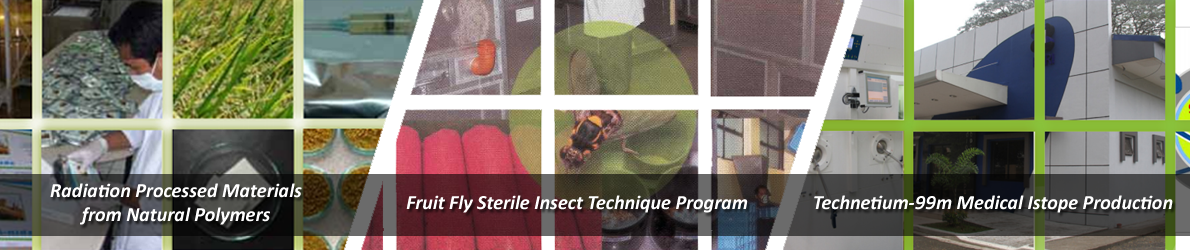
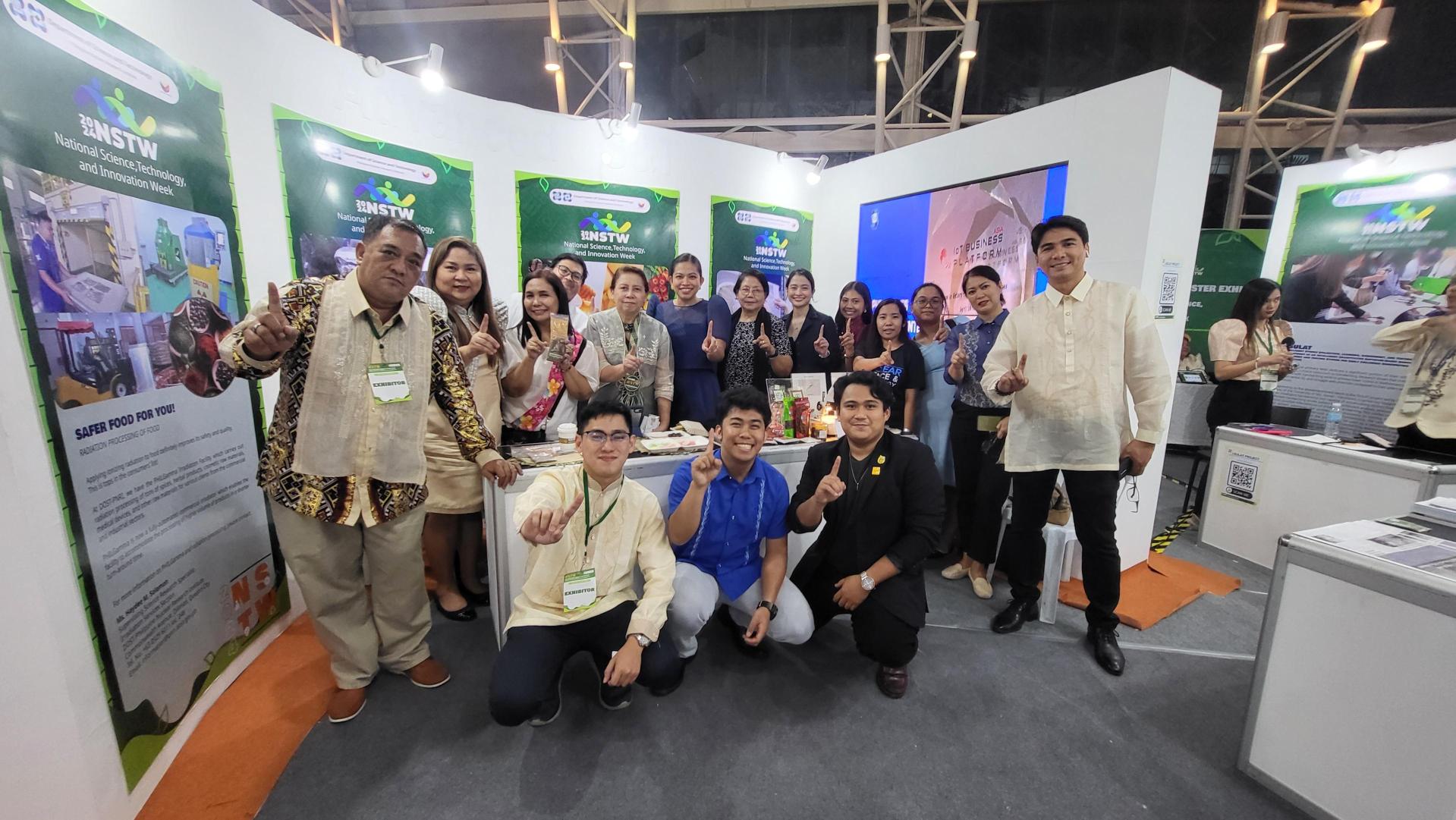
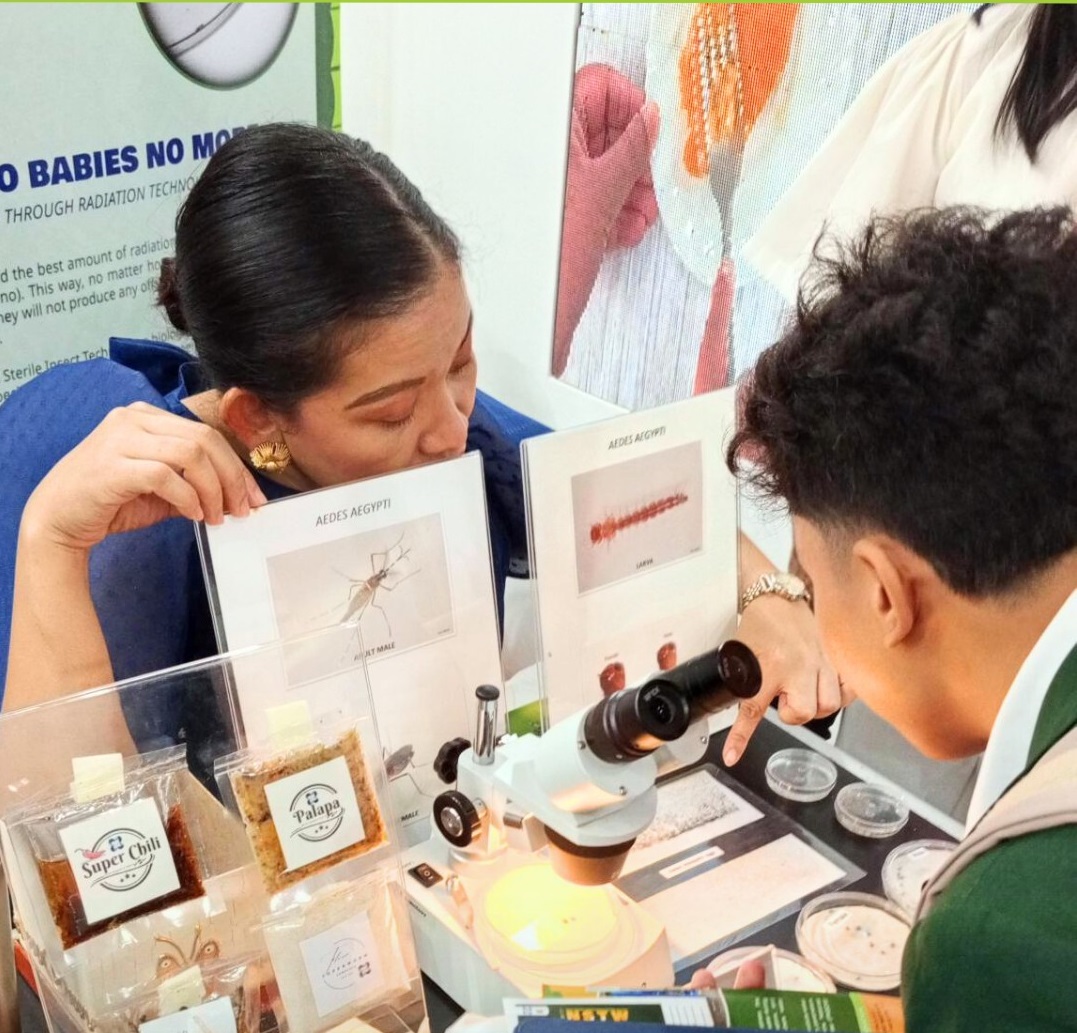
The wonders of atomic innovation are once again felt down South, as scientists from researchers from the Department of Science and Technology-Philippine Nuclear Research Institute (DOST-PNRI) feature its latest nuclear and radiation applications at the 2024 National Science, Technology and Innovation Week (NSTW) at the Limketkai Center in Cagayan De Oro City!
Read more: DOST-PNRI spearheads nuke tech for food and health at NSTW 2024
Importance of nuclear science in food checking at NSTW Forum
- Details
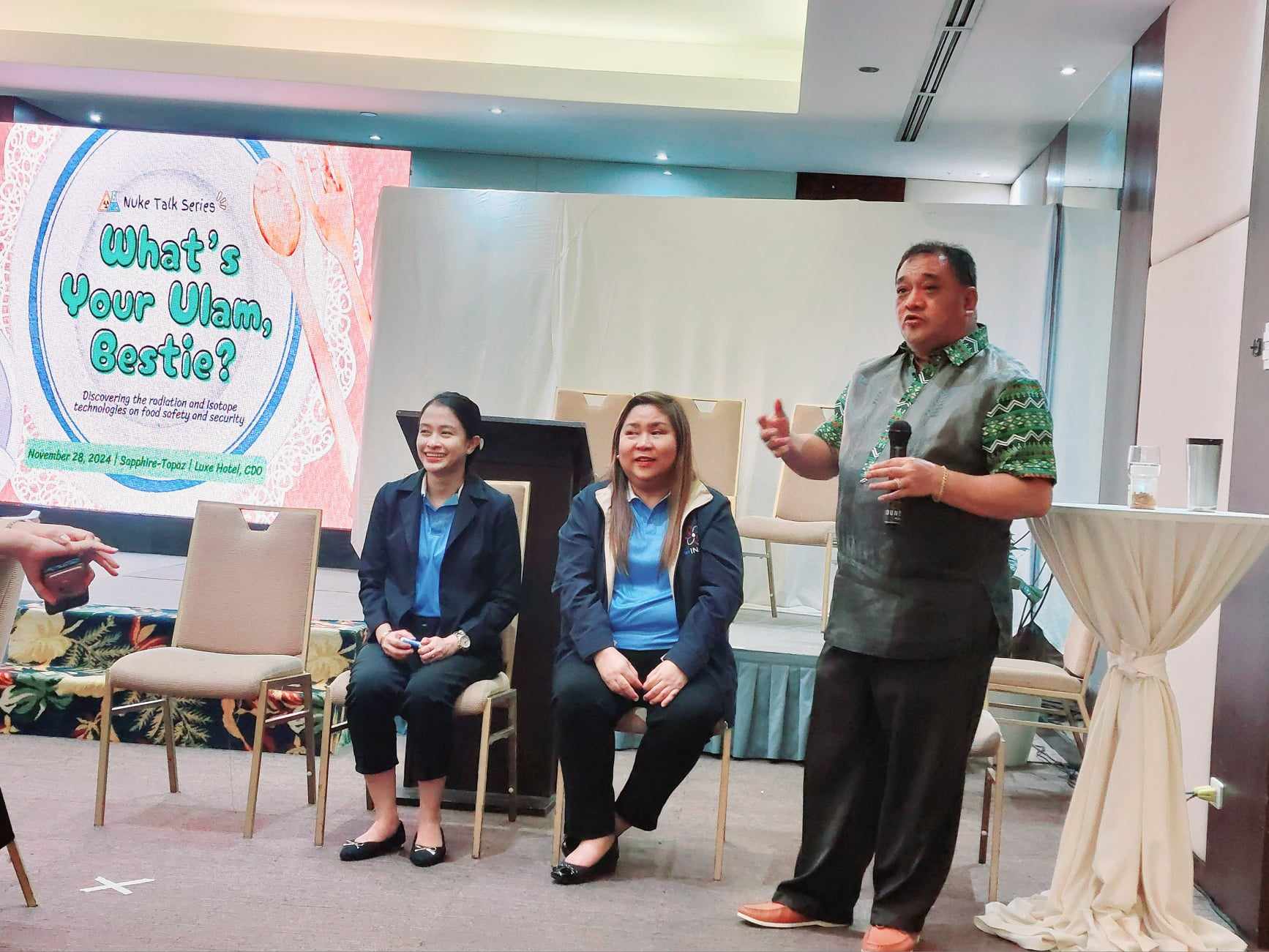
Raymond Sucgang answers questions from forum attendees. With him are (L-R) Kristelle Mae C. Tardecilla and Haydee M. Solomon
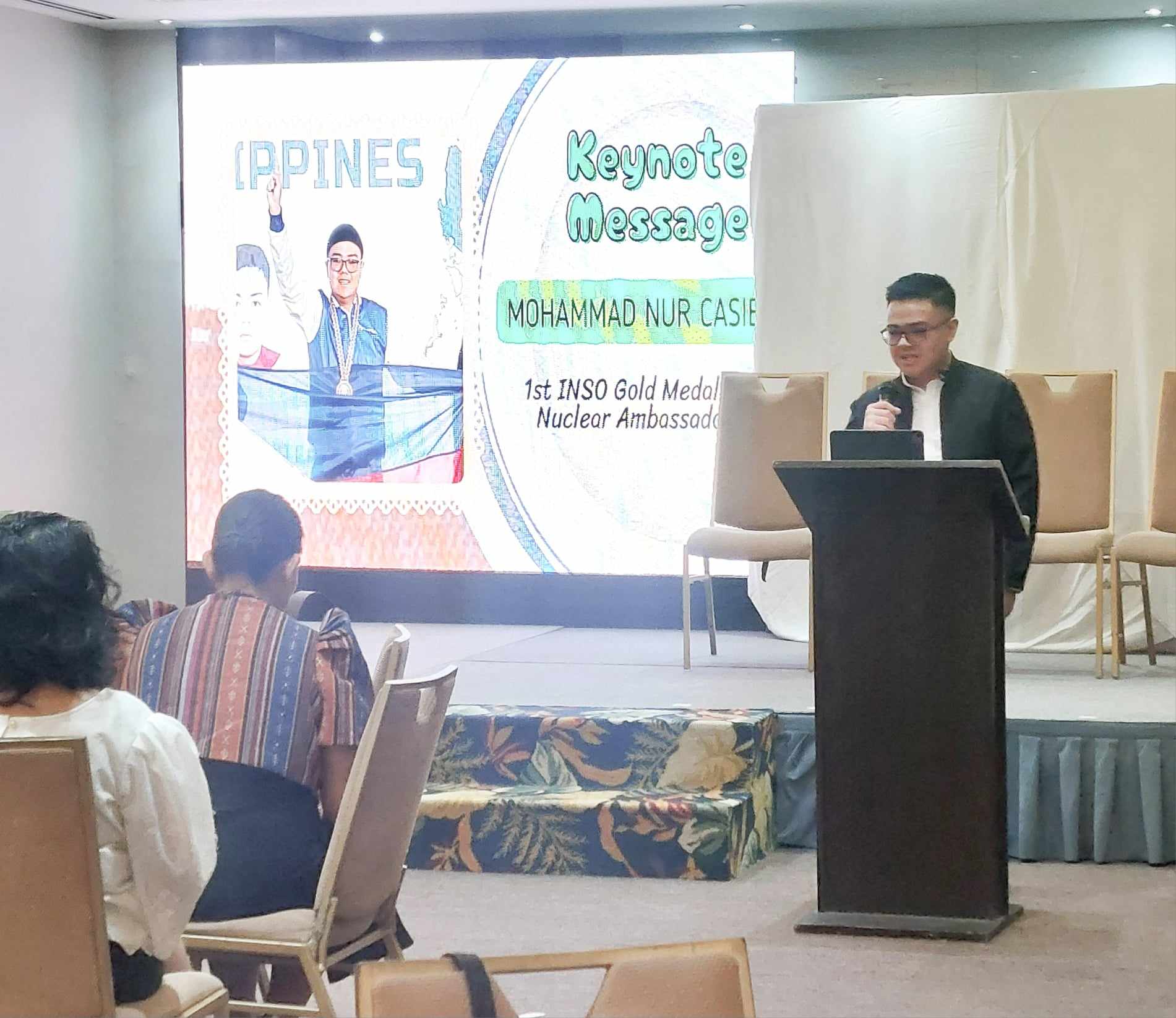
The country’s first ever Nuclear Ambassador, Mohammad Nur Casib, a student of the Philippine Science High School- Central Mindanao Campus, delivers a powerful message on the relevance and importance of nuclear science
Importance of nuclear science in food checking at NSTW Forum
Nuclear science may still be considered by many as “mysterious”, but in reality, it works in things we love, like food.
Food and condiments like honey and vinegar, should be authentic for people to get their money’s worth and to guard their health. For those who are up for nobler things like preference for organic food and adherence to halal standards, pure and authentic food is a must.
There are typical ways of checking like real-time polymerase chain reaction (RT-PCR) that can determine adulterations of foods by biological contaminants or those with DNA.
But what if the food is already processed? There is already no DNA in it, so RT-PCR will no longer work.
Raymond J. Sucgang, a nuclear analytical techniques expert at the Department of Science and Technology-Philippine Nuclear Research Institute (DOST-PNRI), has the answer. “The most effective way to check the food products, whether unprocessed or processed, is through the isotope technique.”
The technique uses tools to identify the isotope fingerprint of the product. Just like humans, food and beverages have fingerprints--a unique chemical signature that allows the product to be identified.
Aside from being able to determine if food is pure or not, isotope techniques can also be used in tracing the geographical origin of food and verifying if it is organic or adheres to halal standards, Sucgang explained.
“Isotope technique can even trace the travel history of a person,” he revealed. “It’s done by checking the isotopes found in the hair.”
These are just a few snippets of the animated discussion on isotope techniques and other nuclear technologies held in the “What’s Your Ulam, Bestie?” forum at the Limketkai Luxe Hotel in Cagayan de Oro on November 28, 2024.
The lively discussion was driven by the moving message on the relevance and importance of nuclear science by the country’s first ever Nuclear Ambassador, Mohammad Nur Casib, a student from Philippine Science High School- Central Mindanao Campus. Casib got a gold and the highest points at the first International Nuclear Science Olympiad, earning him the title.
Organized by the DOST-PNRI, the forum also featured radiation processing and how it is used to lengthen shelf life and help in achieving food safety and security, as discussed by Haydee M. Solomon. Also featured was the so-called “Future Food” presented by Kristelle Mae C. Tardecilla. The goodies, made from superworms, became an instant hit among forum and exhibit attendees.
Messages were also delivered by Deputy Director Dr. Vallerie Anne I. Samson and Chief of Nuclear Services Division Dr. Preciosa Corazon B. Pabroa.
By Framelia V. Anonas, PNRI-Nuclear Information and Documentation Section
DOST-PNRI gets highest number of int'l publications at 2024 DOST IPA Awards
- Details
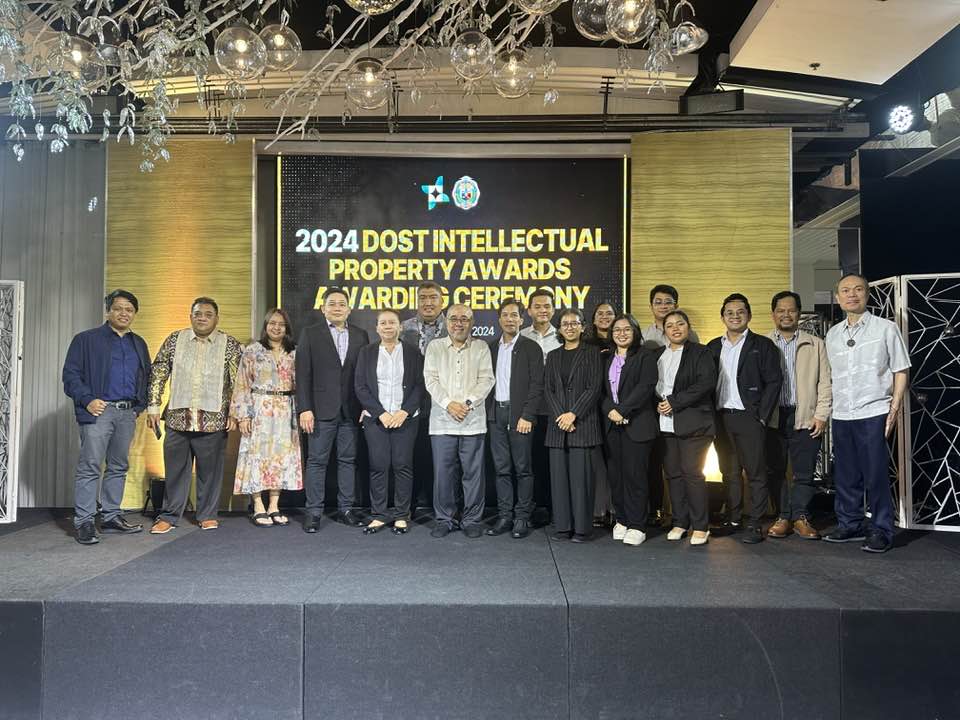
DOST-PNRI gets highest number of int'l publications at 2024 DOST IPA Awards
Congratulations to the DOST-Philippine Nuclear Research Institute (DOST-PNRI) for once again garnering the highest number of international publications at the 2024 Intellectual Property Awards of the Department of Science and Technology!
A total of 26 DOST International Publication Awards (IPA) for PNRI were given by the National Academy of Science and Technology (NAST-PHL) on November 25, 2024 at the Vivere Hotel in Alabang, Muntinlupa City.
The awards are given annually to DOST scientists and researchers whose research outputs were published in internationally-recognized publications.
Since the DOST IPA's inception in 2013, PNRI has consistently proven its prolific research culture with a total of 306 such outputs. The Institute earned the distinction of having the highest number of IPA publications among DOST in 2014, 2016, and more recently from 2018 onwards.
Nuclear energy milestones in PH reported at the IAEA general confab
- Details
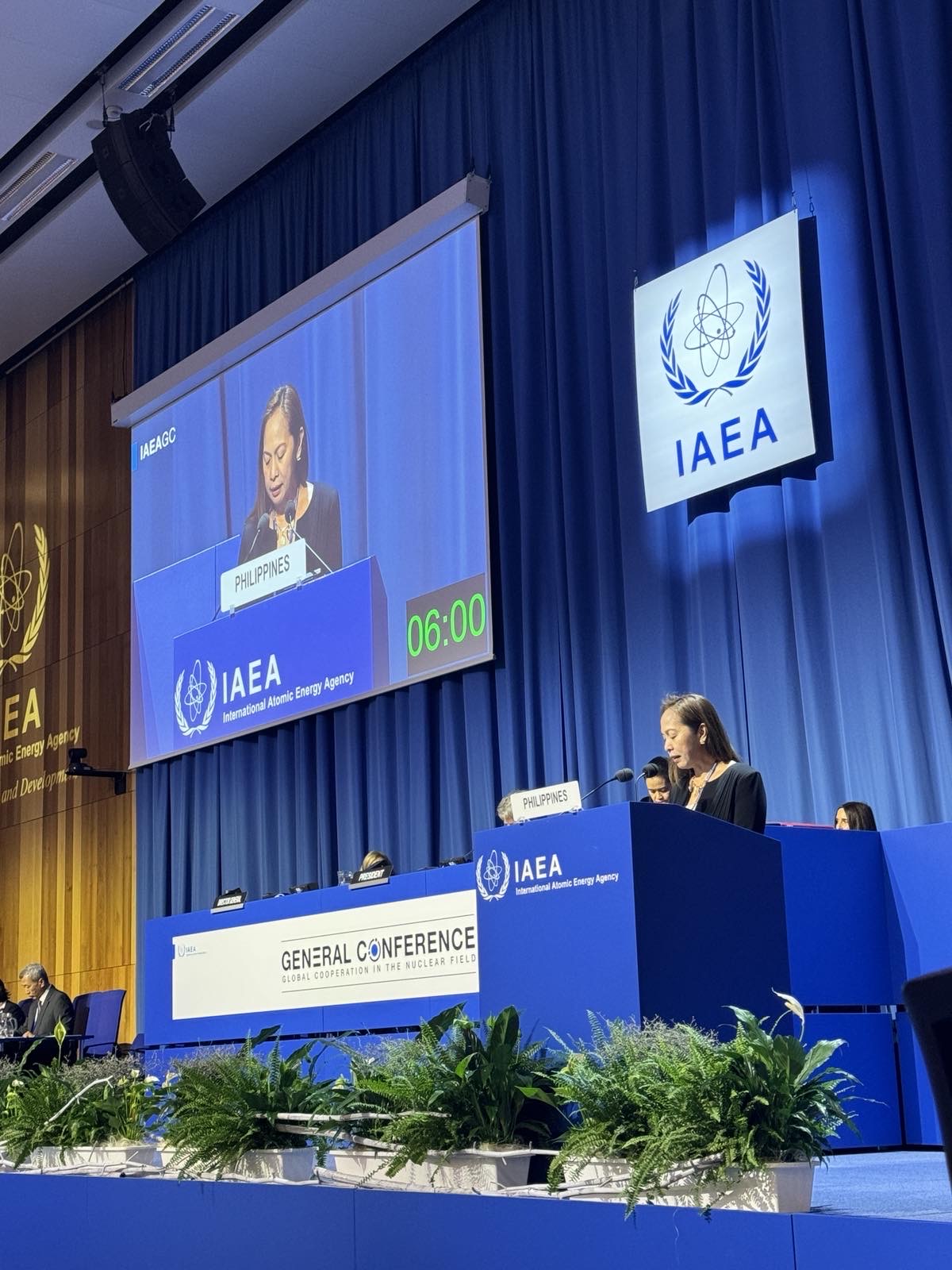
Department of Energy (DOE) Undersecretary Sharon Garin, who leads the Philippine Delegation to the IAEA General Conference, delivers the Philippines statement at the plenary on September 17 (Photo by Atty. Domifel Umingli/Philippine Embassy in Vienna)

IAEA Director General Rafael Mariano Grossi (3rd from right) after a meeting with the Philippine delegation: Philippine Ambassador to Austria and Permanent Representative of the Philippines to the IAEA, Ambassador Evangelina Lourdes Bernas (4th from left), DOE Undersecretary Garin (2nd from right), IAEA Secretary of the Policy-Making Organs (PMO) and former Philippine Ambassador Maria Cleofe Natividad (2nd from left), Department of Science and Technology – Philippine Nuclear Research Institute (DOST-PNRI) Director Dr. Carlo Arcilla (extreme right), DOE Director Patrick Aquino (3rd from left) and Dan Bagaporo, Third Secretary, Philippine Permanent Mission (extreme left) (Photo by Dean Calma/IAEA)
Nuclear energy milestones in PH reported at the IAEA general confab
Doing its part in the continued effort towards global cooperation in the nuclear field, the Philippines joined hundreds of its fellow Member States at the 68th General Conference of the International Atomic Energy Agency (IAEA) from September 16-20, 2024, in Vienna, Austria.
The Philippine delegation was led by Department of Energy Undersecretary Sharon Garin, accompanied by the Philippine Ambassador to Austria and Permanent Representative of the Philippines to the IAEA, Ambassador Evangelina Lourdes Bernas, Department of Science and Technology – Philippine Nuclear Research Institute (DOST-PNRI) Director Dr. Carlo Arcilla, and other officials.
Read more: Nuclear energy milestones in PH reported at the IAEA general confab